
Forum
- Subforum
- System Solve - Bugs
Why Electropolished 316L Stainless Steel Is Essential for UHP Chemical Delivery
Ultra-high-purity (UHP) chemical shipment systems are crucial in semiconductor production, where even incredibly percentages of contamination can impact wafer top quality, procedure uniformity, and manufacturing yields. For this reason, every component that enters into call with procedure chemicals must be meticulously picked. Among the most vital materials used in UHP chemical circulation is 316L stainless steel, specifically when the tubing and piping are electropolished.
316L stainless steel provides a combination of corrosion resistance, mechanical toughness, cleanability, and compatibility with demanding chemical settings. When appropriately produced and electropolished, it provides a smooth, low-contamination path for moving high-purity chemicals from storage space and circulation equipment to factors of use.
How Electropolishing Supports Chemical Purity

The efficiency of stainless-steel piping in a UHP system depends not only on the product itself yet additionally on the problem of its inner surface area. Electropolishing is an electrochemical completing process that removes a slim layer of product from the stainless-steel surface. This procedure can decrease microscopic surface abnormalities, generating a smoother and a lot more consistent interior coating.
A smoother surface area is valuable since it supplies less places where particles, residues, or chemical pollutants can collect. In an appropriately created UHP chemical shipment system, this assists maintain the sanitation of the liquid path and supports constant chemical top quality.
Electropolishing can likewise improve the surface area's deterioration resistance by promoting a cleaner, much more passive stainless-steel surface. This is particularly important when piping is revealed to aggressive process chemicals over expanded operating periods.
Why 316L Stainless-steel Is Well Suited to UHP Equipments
The "L" in 316L describes its reduced carbon material compared with basic 316 stainless steel. This quality can help reduce the threat of sensitization throughout welding and supports deterioration resistance in correctly produced settings up. These homes make 316L a widely made use of material for demanding process-fluid applications.
For semiconductor chemical delivery, corrosion resistance is especially essential. Chemical degradation of piping can present undesirable metallic contaminants into the procedure stream while also reducing equipment life. Premium 316L construction, combined with appropriate construction and surface treatment, helps produce a resilient and reliable chemical pathway. To Know Extra at https://www.chengweisemi.com/product/.
The material's mechanical toughness is an additional advantage. Chemical shipment systems may run continually and can include long piping runs, valves, fittings, and link points. The piping has to maintain architectural integrity while supporting trustworthy chemical transport and system uptime.
Supporting Trusted Chemical Circulation

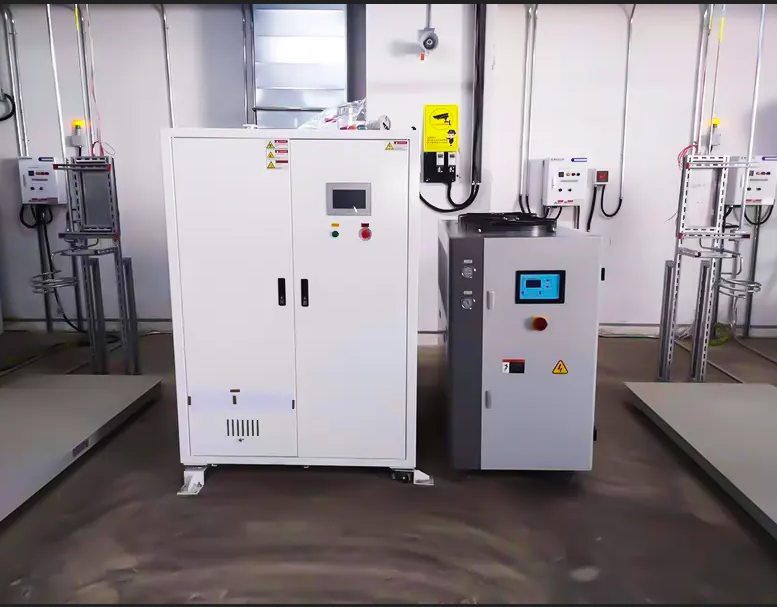
In advanced UHP Chemical Dedelivery Cabinet facilities, chemical shipment is greater than merely relocating liquids from one area to one more. The system needs to keep regulated conditions throughout transport, circulation, and point-of-use shipment. This makes the quality of the piping infrastructure a vital part of total process control.
Electropolished 316L piping can sustain this objective by giving a controlled, clean interior path. When integrated with proper shutoffs, installations, filtration, surveillance, and automated controls, it can contribute to a chemical shipment style created around purity and repeatability.
For companies such as Shanghai Chengwei Semiconductor Equipment Co., Ltd., UHP chemical distribution innovations can incorporate these product benefits with automated Chemical Shipment Systems (CDS) and Chemical Delivery Modules (CDM). A CDS can support bulk chemical transport from storage towards facility distribution, while a CDM can offer controlled chemical distribution, blending, or dilution closer to the point of usage. In both applications, the integrity of the fluid-contacting parts is vital to keeping the desired chemical environment.
Conclusion
316L stainless-steel issues in UHP chemical shipment systems due to the fact that worldly top quality and surface area problem directly contribute to the integrity of the chemical flow course. Electropolishing further improves the viability of stainless-steel piping by creating a smoother, cleaner inner surface and sustaining corrosion resistance.
For semiconductor manufacturers collaborating with increasingly demanding pureness demands, electropolished 316L piping can develop an essential foundation for trustworthy chemical circulation. When incorporated with accuracy engineering, automated controls, proper manufacture practices, and well-designed CDM and CDS technologies, it helps produce chemical delivery systems with the ability of supporting constant, high-purity semiconductor procedures